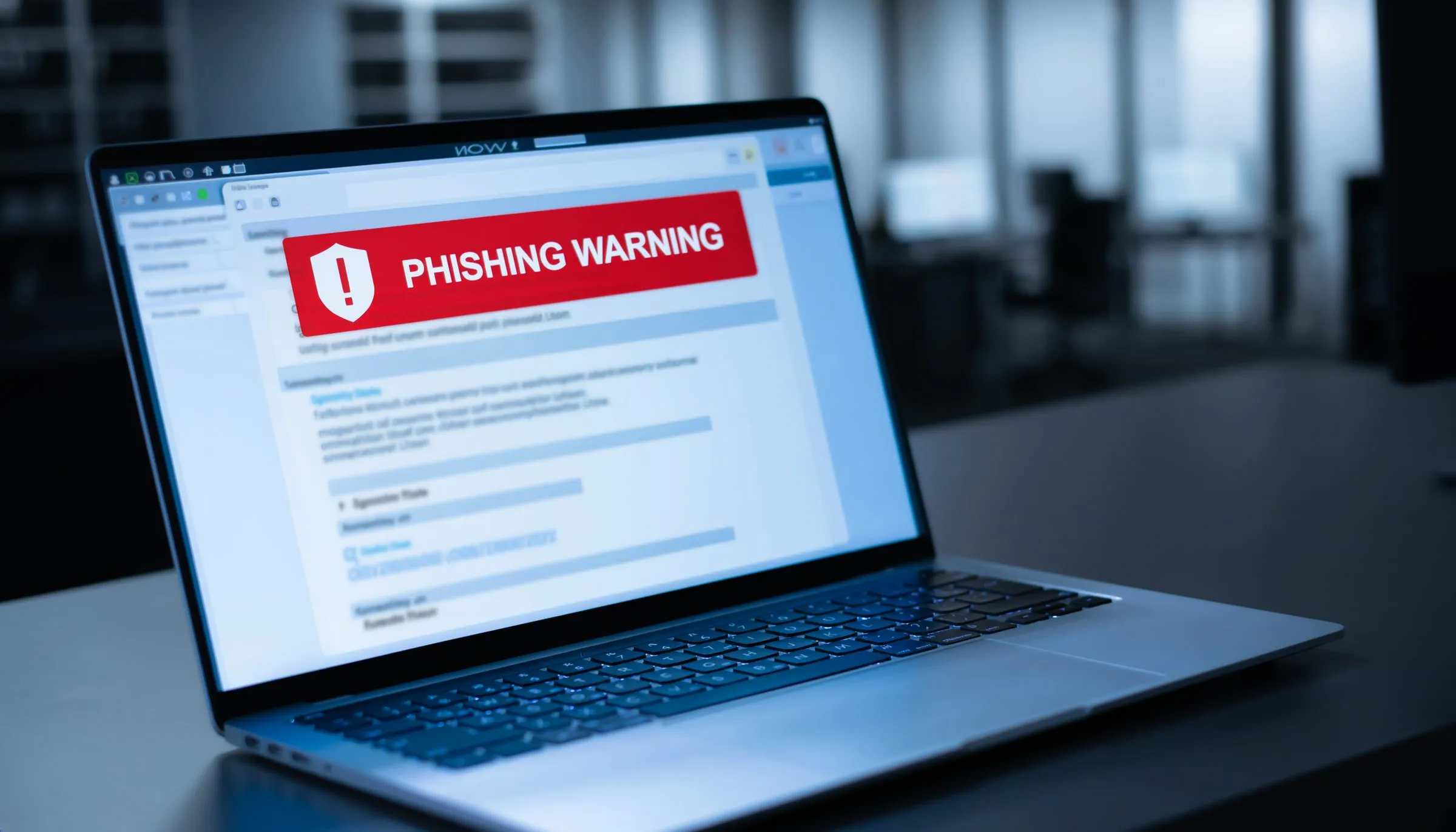
Phishing email
Fake invoice or parcel notification with a link
How we protect you
- Email filtering
- Awareness training
- Multi-factor authentication

IT Security, GDPR & NIS2
We protect your network, your devices and your data – and help you implement and document the GDPR and NIS2 on the technical side.
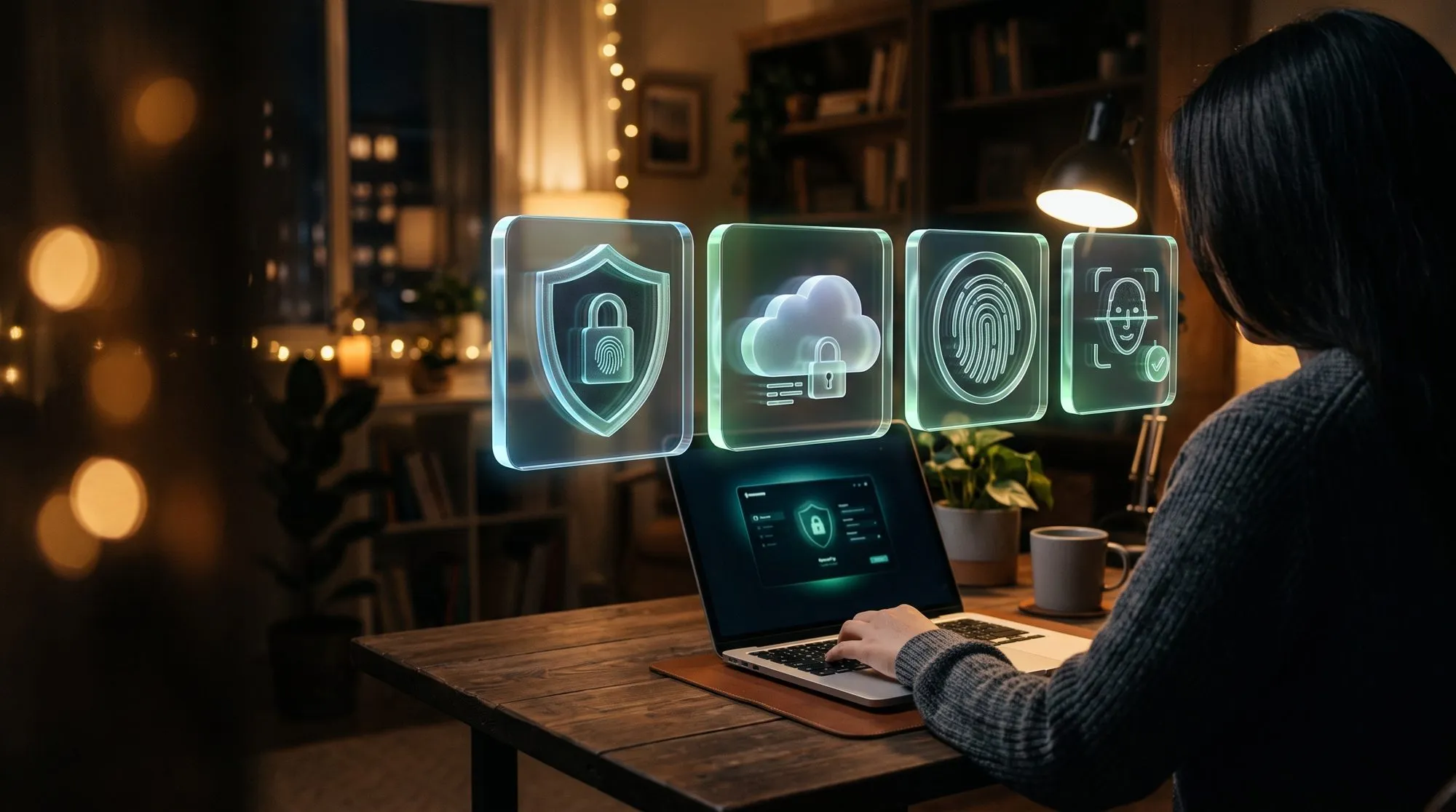
IT security means preventing attacks, data loss and outages with several layers of protection: firewall, up-to-date software, multi-factor authentication, antivirus, trained staff and separate backups. No single measure is enough – only together do they make a business resilient.
Most attacks on small businesses don’t start with a hacker at a screen but with a genuine-looking email, a stolen password or a device without updates. That is exactly where we start: pragmatically, in the right order and without overwhelming your team with technology.

Protection in four layers
Sensitive data
Law firms, tax advisers and medical practices process data that is particularly sensitive. We know the typical applications and workflows in these sectors and align permissions, encryption and backups with them.
Want to use AI without sensitive data leaving your organisation? With houdini, names, diagnoses and account numbers are automatically replaced with placeholders before anything is sent to the AI.
NIS2 in Austria
Austria implements the EU NIS2 directive with the Network and Information Systems Security Act 2026 (Netz- und Informationssystemsicherheitsgesetz 2026, NISG 2026). It has been in force since 1 October 2026. Entities in scope must register, implement risk management measures and report significant security incidents.
It mainly affects medium-sized and large companies in specified sectors – including healthcare, energy, transport, digital infrastructure and certain manufacturers. Even businesses that are not directly in scope often feel NIS2 indirectly: as suppliers or service providers, they are increasingly asked by customers for evidence of their IT security.
Current details on deadlines and registration are available from the Austrian Economic Chamber (WKO, in German).
This does not replace a legal classification – for that, it is best to also work with your legal adviser.
Most common entry points
Fake invoice or parcel notification with a link
How we protect you
A reused password from a data leak
How we protect you
A known vulnerability in Windows, the browser or the firewall
How we protect you
Remote Desktop directly reachable from the internet
How we protect you
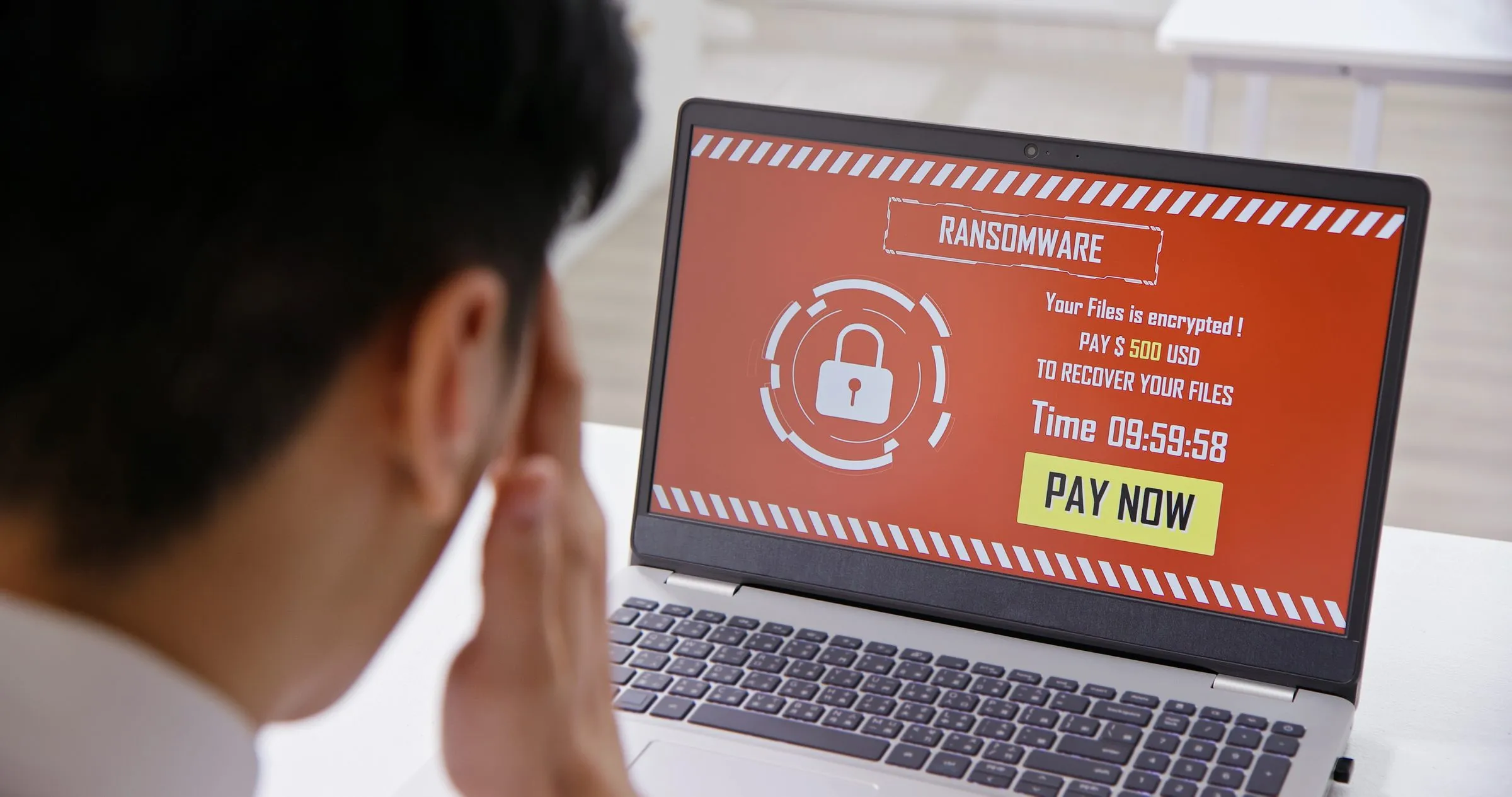
Data and backups are encrypted and a ransom is demanded
How we protect you
The security check shows which of these entry points are open in your organisation – and what to do first.
Request a security checkNetwork segmentation
Firewall, antivirus and updates protect the entry points. But if an attacker does get onto one device, what matters is how far they can go from there. Network segmentation divides your network into separate zones – like fire compartments in a building – so that an incident stays contained.
Ransomware typically spreads from the first infected PC to file servers and backups. In a segmented network, a firewall between the zones stops exactly that movement: workstations cannot reach the backup storage directly, printers and cameras sit in their own zone, guests only reach the internet. Remote access via VPN is also limited to the zones a person really needs.
We therefore set up segmentation as standard for every client, including small offices, law firms and medical practices. For NIS2 too, network security is part of the required risk-management measures.
How segmentation worksYour network isn’t segmented? “Our IT provider says we don’t need VLANs”? Let’s talk about it.
How we work
We review your firewall, accounts, devices, backups and Microsoft 365 and show you where the biggest risks are.
You receive a prioritised list: first the things that reduce risk the most – with effort and costs.
We implement the measures without interrupting your operations and train your team.
Monitoring, updates and regular reviews keep your level of protection high over time.
Frequently asked questions
Your question isn’t listed? Call us on +43 1 2266 2260.
Most attacks are automated: phishing emails and scans for vulnerabilities hit every business, regardless of size. Small businesses often have fewer safeguards in place and are therefore easier to hit.
NIS2 is an EU directive for stronger cybersecurity. In Austria it is implemented by the NISG 2026, which has been in force since 1 October 2026. It mainly affects medium-sized and large companies in specified sectors such as health, energy, transport or digital services. We will work out with you whether and how you are affected.
Entities in scope must register with the Federal Office for Cybersecurity (Bundesamt für Cybersicherheit), implement and document appropriate security measures and report significant security incidents. We support you with the technical implementation and documentation; the legal classification is best clarified additionally with your legal adviser.
With multi-factor authentication, a password alone is not enough: a code on your smartphone or a security key is also required. Even if a password is stolen, the account stays protected.
Most attacks start on a single device – via a phishing email or an outdated printer. In a flat network, the attacker can reach every other system from there, including servers and backups. Segmentation splits the network into zones with a firewall in between, so an incident stays contained. That is why we set it up as standard, even for small networks.
No. Antivirus is an important layer, but many attacks start with stolen credentials or a convincingly genuine-looking email. Real protection comes only from the combination of firewall, updates, multi-factor authentication, a trained team and separate backups.
What matters is acting quickly and in an orderly way: disconnecting affected systems from the network, containing the damage, restoring data from a clean backup and checking reporting obligations. With an incident plan, everyone involved knows in advance what to do.
The GDPR requires personal data to be protected by appropriate technical and organisational measures. Encryption, access rights, backups and documented processes are exactly such measures. We implement the technical side and document it.
At least once a year, and additionally after major changes such as new locations, new software or working from home. Ongoing monitoring catches many problems in between.
Free initial consultation, an honest assessment, no long-term contract.
Already a client? Support: +43 1 2266 2266 or support@it-united.at